Home > News > Insight | Indoor air quality: understanding the solutions available to address a growing concern
Insight | Indoor air quality: understanding the solutions available to address a growing concern
Long overshadowed by issues of energy efficiency and the climate emergency, indoor air quality is now becoming a major concern: the need to provide building occupants with a healthy environment has been brought to the fore by the pandemic and, at the same time, the RE 2020 regulations require the monitoring of installed residential ventilation systems.
What is the regulatory framework for IAQ? What technologies are currently available? How should they be selected? How is the market evolving?
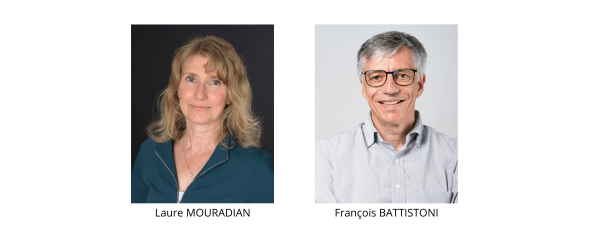
Laure Mouradian, Deputy Director of Collective Initiatives and Innovation, and François Battistoni, sales engineer and aerodynamics trainer (CETIAT), discuss the solutions and support the technical centre provides to manufacturers to enhance the reliability and performance of their products.
What is the regulatory framework governing ventilation and indoor air quality?
Laure Mouradian (LM):For a long time, indoor air quality and energy were treated as separate issues: the Building and Housing Code states that “buildings shall be designed, constructed and maintained in such a way as to preserve indoor air quality, which is subject to specific requirements depending on the type of building” (Article L 153-1) and that “the construction and renovation of buildings shall limit the energy and resource consumption of new and renovated buildings […], without compromising compliance with health and thermal comfort objectives”. However, the resulting regulations – health regulations, the Labour Code and thermal/energy regulations – set out separate requirements.
Initially, the focus on ventilation was on improving building health (the aim was to prevent problems caused by damp and the growth of mould), but attention then shifted to the energy consumption of the systems. Now, it encompasses all aspects of performance: thermal comfort, acoustic comfort and, of course, air quality.
The RE2020 marked a turning point: from now on, the quality of ventilation systems installed in residential buildings must be verified in order to issue the RE2020 compliance certificate. It is therefore now accepted that the essential reduction in energy consumption must not be achieved at the expense of indoor air quality.
The Building Code has been amended to better accommodate innovative systems by shifting from means-based requirements to outcomes-based requirements: this is known as the ‘performance-based’ approach. For ventilation systems, a group of experts is working on defining the minimum criteria to ensure good indoor air quality, with the aim of publishing a decree in 2025.
Have you noticed a “Covid effect” that has accelerated this shift towards greater consideration of indoor air quality?
Since the pandemic, the issue of indoor air quality has become a reality for everyone: how do we refresh the air? How does ventilation work? What proportion of fresh outdoor air needs to be mixed with indoor air to eliminate the risk of the virus spreading?
Laure Mouradian (LM): Of course, the pandemic has had an impact: previously, the general public didn’t really give much thought to the air they breathed inside buildings. Now, the issue has become a reality for everyone: how do we refresh the air? How does ventilation work?What are the implications of recirculating indoor air in terms of virus transmission? To what extent must indoor air be diluted with so-called ‘fresh’ outdoor air to eliminate the risk of the virus spreading? How should we treat this air, which itself carries pollutants?
In practical terms, has the emergence of these new issues had an impact on the development of solutions made available to users to improve air quality?
Laure Mouradian (LM): First ofall, it is important to distinguish between two types of techniques, which can complement one another: ventilation and air purification. François Battistoni (FB):
Ventilation
The main functions of mechanical ventilation are to supply outdoor air (“fresh air”) to occupants and to keep indoor pollutants (such as CO₂, VOCs, etc.) at low levels through dilution. The higher the air flow rate, the more the pollutants are diluted, but this has direct consequences for energy consumption in two respects: the power consumption of the fans and the need to heat or cool the incoming air. This is why controlling the energy consumption of ventilation systems involves setting flow rates to the “bare minimum”, ideally by adjusting them according to pollution levels, occupancy rates and the IAQ targets to be achieved, and possibly by recovering the energy contained in the extracted ventilation air. Ventilation systems can thus be single-flow or dual-flow types with an extract air heat exchanger.
The pandemic has sparked interest in complementary technologies, such as air purification.
Air purification
Air purification works on a different principle: the air is not replaced but purified inside the building by passing through a filtration system. Unlike ventilation, which acts on all components of the air – VOCs, particles, odours, CO₂, humidity, pollen, dust, etc. – each air purification technology targets a specific type of pollutant. Particle filters are almost always present in air purifiers to remove both inert and living particles (if the filter is a high-efficiency particulate air – HEPA – filter). They can be supplemented by other technologies (plasma, photocatalysis, ionisation, electrostatic filtration, UV-C, activated carbon), which thus enable other types of pollutants to be targeted. No single technology acts across the entire spectrum.
It is important to note that air purification is a complement to ventilation, because when it comes to supplying oxygen and removing CO₂, only air exchange works! During the pandemic, there was a sharp rise in the availability of ‘stand-alone’ air purifiers – more commonly known on the market as air purifiers – which users can move and install in whichever rooms they wish.
When selecting an air purifier, filtration/purification efficiency is an important criterion, but air flow rate is an equally essential parameter, as it determines the size of the room that can be treated. According to best practice, the air change rate required for effective purification is around 5 air changes per hour.
How are air purifiers tested?
François Battistoni (FB): At CETIAT, we have air filter test benches. These benches have been adapted to test the intrinsic performance of air purifiers in accordance with standard NF B44-200: 2016 (Stand-alone air purifiers for commercial and residential applications – Test methods – Intrinsic performance) regarding the particulate filtration performance of air purifiers.
We systematically measure the flow rates and power consumption of the units, as well as their filtration efficiency with regard to inert particles. Filtration efficiency against living particles (bacteria, fungi, pollen) is measured on our test bench with the assistance of a specialist partner.
Airflow and filtration efficiency measurements are combined to determine the CADR (Clean Air Delivery Rate). It simply reflects the fact that a less efficient unit must circulate more air to remove pollutants.
CETIAT also tests the noise levels of the appliances, as if these are high, the appliances will rarely be used at their maximum capacity.
So how do you choose the right system?
These two techniques—ventilation and air purification—should not be seen as mutually exclusive; they can be combined depending on the specific circumstances: what type of building is it? What is the source of pollution? What area needs to be treated? Are the people using the space particularly vulnerable?
Laure Mouradian (LM): First and foremost, we must not pit the two techniques —ventilation and air purification— against one another. Their design addresses different challenges and must take the context into account: what type of building is it? What is the source of pollution? What area needs to be treated? Does the public using the space have any particular vulnerabilities?
With regard to ventilation, the design must ensure compliance with national regulations on indoor air quality and energy performance.
When it comes to air purifiers, we first look at the pollutants to be treated in order to select the appropriate purification technology, and then at the volume of the room to be purified, which determines the required flow rate.
The absence of emissions of undesirable by-products such as ozone is also an important factor in the decision-making process.
The noise levels of the appliances – at equivalent flow rates – and their power consumption should be compared.
Does the layout of the premises affect the efficiency of stand-alone air purifiers?
François Battistoni (FB): Yes, the intrinsic performance of the chosen appliance is not the only factor to take into account. The final performance is influenced by the environment. For example, in the case of a stand-alone air purifier, its positioning in the room affects the outcome: its efficiency is not the same if it is placed in the centre or in a corner. In fact, CETIAT is currently conducting a research project on the actual performance of air purifiers in buildings. This parametric study relies on the use of numerical simulation of air flow and aerosol transport, as well as on measurements of particle concentration in the ambient air of several commercial premises. Its aim is to generate data and produce recommendations for the positioning and sizing of these units.
How does CETIAT’s work enable manufacturers of these air purifiers to make progress and offer more effective solutions?
François Battistoni (FB): At present, there is no standardised way of describing aircraft performance. Establishing harmonised indicators is an essential first step.
This is the case, for example, with the display of acoustic performance data. The noise perceived by users (local sound pressure) depends on many factors. Is the room empty or heavily furnished, fitted with wooden flooring or carpet, what is its surface area… and, of course, is the measurement taken at the outlet of the appliance or a few metres away? Laboratory characterisation of the sound power of appliances, independent of the properties of the room in which they are installed, allows for a perfect comparison between different units.
How does CETIAT support manufacturers in making their products more reliable and improving their performance? Laure Mouradian (LM): We make a number of different contributions, at both individual and collective levels, and in France and internationally:
We support manufacturers in a very practical way
We have the necessary test facilities to carry out a comprehensive characterisation of their products across various parameters: acoustic, aerodynamic, thermal and filtration efficiency. Our teams of experts can support them from concept to market launch, with a focus on continuous improvement. We help them refine their prototype as testing progresses, until its performance meets their requirements.
At sector level
As an Industrial Technical Centre, our core mission is to carry out collaborative studies, monitor standards and regulations, and undertake research projects that benefit our members across all the technical issues they face in the development of their products.
There is a great deal of new development in French regulations: as part of the RE2020 initiative, we have been involved in drawing up the verification protocol for ventilation systems in residential buildings.
In line with these regulations, the CAP2030 initiative aims to develop a framework that is more ambitious than the RE2020 and has set up an Indoor Environmental Quality (IEQ) working group, in which indoor air quality is a key focus. We will be following this matter closely.
Internationally
Our work may form part of European research projects, such as Annex 86 of the International Energy Agency’sBuilding Energy Programme (IEA EBC) on “Effective management of indoor air quality in residential buildings”.
In addition to defining IAQ indicators and criteria, this research programme aims to assess the effectiveness of various simulation strategies through numerical simulations. The various European research centres involved in the project are pooling their findings to draw robust conclusions that the entire industry can rely on.
We are also involved in several European and international standardisation committees working on equipment testing methods.
So you are at the heart of industrial innovation. How do you see the market evolving over the next few years?
Laure Mouradian (LM): We began the interview by clarifying the distinction between the two technologies: air purification and ventilation. These two functions can be performed separately or integrated into a single piece of equipment or system. Thus, ventilation systems with mechanical air supply, air handling units and dual-flow CMVs incorporate at least a particulate filter. Some single-flow mechanical ventilation systems using extraction can now be coupled with air inlets designed to filter outdoor air. CETIAT has already had the opportunity to work with certain stakeholders to validate the performance of this type of system. Generally speaking, air-handling systems, which are primarily dedicated to air conditioning, may include air purification functions.
Whatever the product’s inherent qualities, its performance also depends on how the systems are installed and maintained. That is why we also run a training centre and encourage installers to keep their skills up to date.
Any final thoughts?
Laure Mouradian (LM): The bulk of our work involves supporting the industrial sector: from contributing to the development of regulations through to the market launch of their products, including assistance with design, testing and validation. Whatever the intrinsic qualities of the product, its performance is also linked to the installation and maintenance of the systems. That is why we also have a training centre and encourage installers to keep their skills up to date to keep pace with technical developments, which can sometimes happen very quickly.
You might find this interesting
News
Expert advice – Making the most of waste heat: what are the key steps in the process?
Lauriane GIROUD, a research officer at CETIAT, outlines the three key stages involved in structuring a waste heat recovery project, from identifying heat flows to selecting technical and financial solutions.
News
The ventilation, refrigeration and heating sector: a sector that drives innovation
CETIAT contributes to the overview of the ventilation, refrigeration and heating sector in Auvergne-Rhône-Alpes, published by Auvergne-Rhône-Alpes Entreprises.
News
Carnot MECD Institute: CETIAT joins the network
CETIAT has joined the Carnot MECD Institute to strengthen collaboration and pool expertise on issues relating to sustainable construction.
News
Standalone air purifiers: CETIAT publishes an installation guide
CETIAT has published a new guidance sheet on stand-alone air purifiers. Find out about best practice for installing them on the premises.