Thermal and aerodynamic modelling of 0D and 1D systems
Understand, predict and optimise the behaviour of your systems using 0D/1D modelling under real-world conditions
Expertise at the heart of our experimental facilities
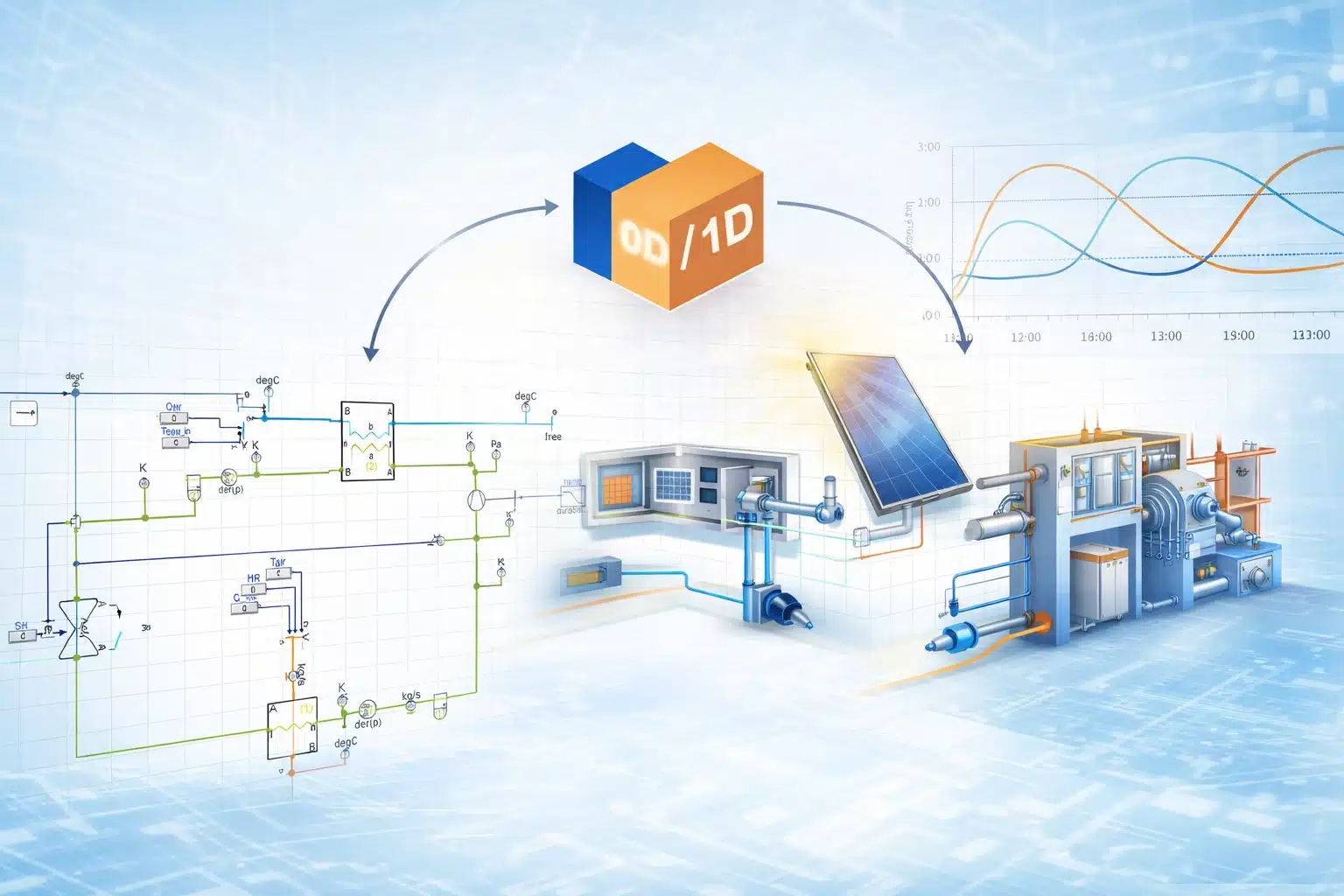
CETIAT develops 0D/1D system models to analyse and predict the actual behaviour of thermal equipment (boilers, heat pumps, hybrid heat pumps, etc.), air-handling equipment (air distribution systems, fans), HVAC (air handling units) and industrial equipment (drying, energy recovery, etc.). This dynamic approach captures heat and fluid exchanges, transient phases, control effects and the influence of operating conditions.
Based on measurements from our test platforms and the multidisciplinary expertise of our engineers, 0D/1D modelling provides a reliable and actionable understanding of how systems function as a whole. It is an effective tool for optimising, sizing or improving your equipment and facilities.
A multiphysical and systems-based approach
At CETIAT, system modelling forms part of a holistic approach that goes beyond the analysis of individual components to consider the functioning of the entire system, where appropriate within its environment, including, where relevant, the building and its occupants.
This multi-scale approach links internal phenomena to the overall behaviour of a system, as well as to the thermal and air-flow behaviour of the building where relevant, by integrating thermal, fluid, energy and control effects.
It enables you to:
- understand the interactions between components within a complex network (hydraulic, air-handling and thermal), and their impact on comfort, air quality and the overall functioning of the building,
- analyse and optimise smart ventilation systems, including their design and control (CAV, VAV, DCV),
- implement control strategies based on indoor air quality (CO₂, VOCs, humidity, PM2.5, formaldehyde),
- to predict and improve indoor air quality (IAQ), and thermal and ventilation comfort where applicable,
- to assess how the system responds to changes in load, operating conditions or the environment,
- simulate scenarios representative of real-world use (weather conditions, loads, occupancy patterns, control strategies),
- link internal factors to overall performance: efficiency, energy consumption, comfort, stability, air quality, noise,
- to optimise the performance of the system as a whole, rather than simply improving a single component.
Applications
Ventilation
- Analysis and sizing of ventilation systems
- Flow dynamics, pressure variations, fan–network interactions
- Assessment of air quality using air renewal scenarios
- Studies on comfort in ventilated environments
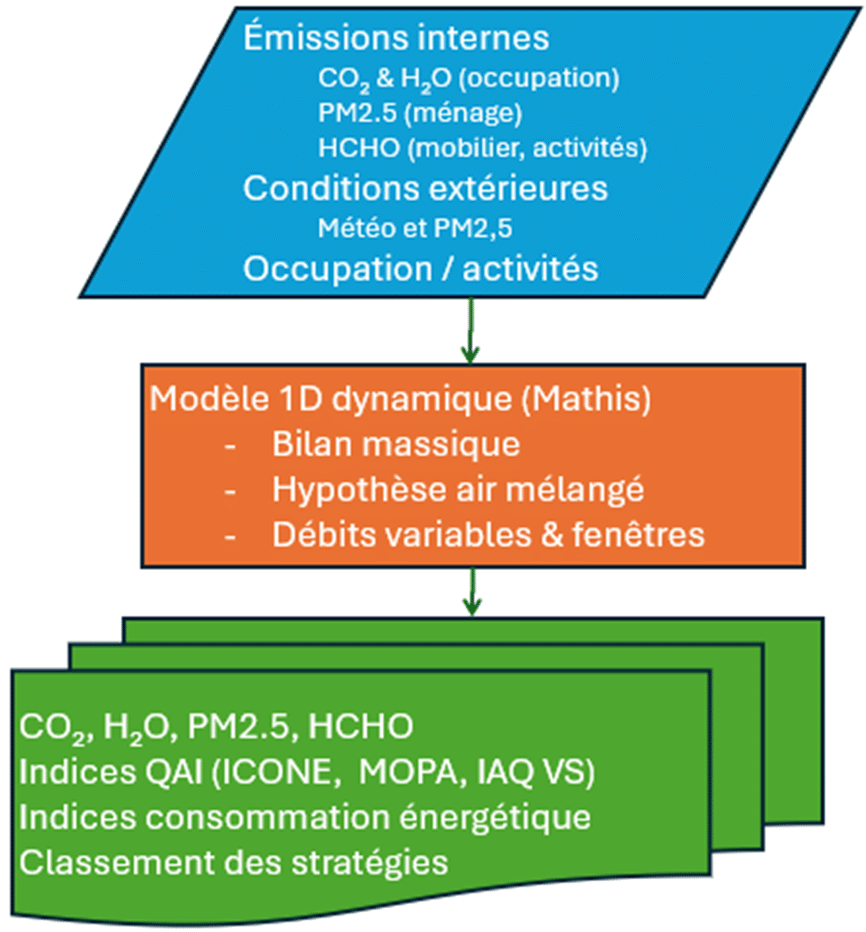
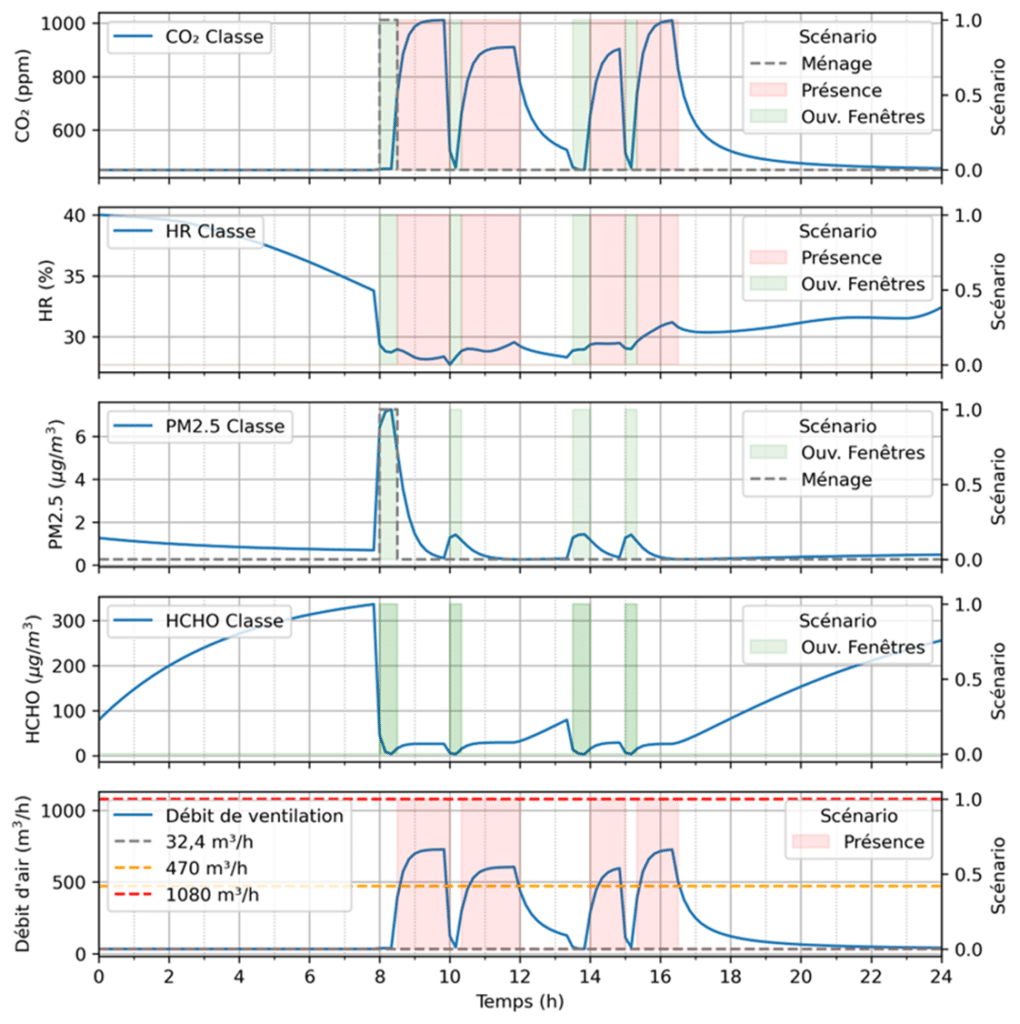
Case study: modelling the ventilation of a classroom fitted with a dual-flow system modulated according to CO₂ levels. The room, with a floor area of 60 m², is occupied by 2 adults and 28 children. The sources of pollutants taken into account include emissions from the occupants (metabolism and activities), the furniture and external inflows. The study enables the system’s control strategies to be assessed and optimised, taking Indoor Air Quality into account.
Case study: modelling of a wind tunnel and comparison with actual measurements.
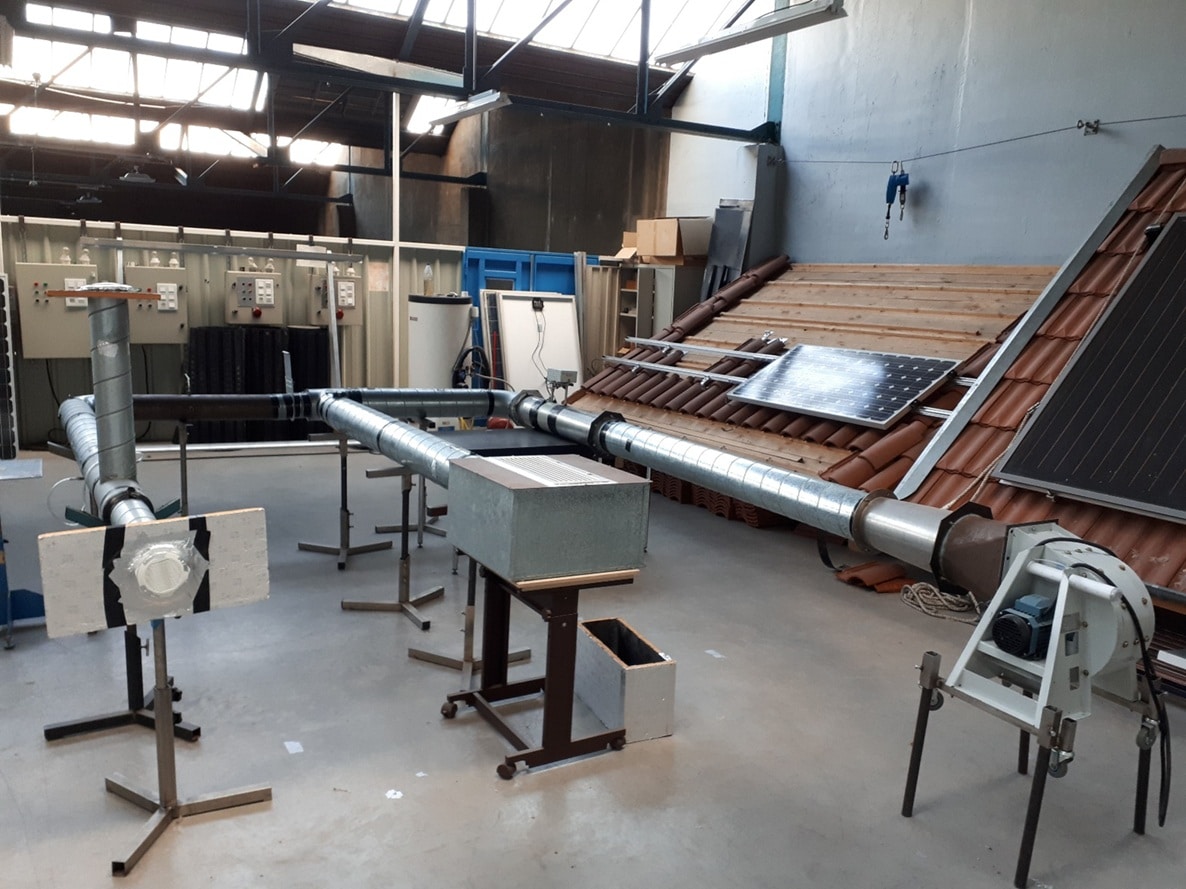
Airflow test bench
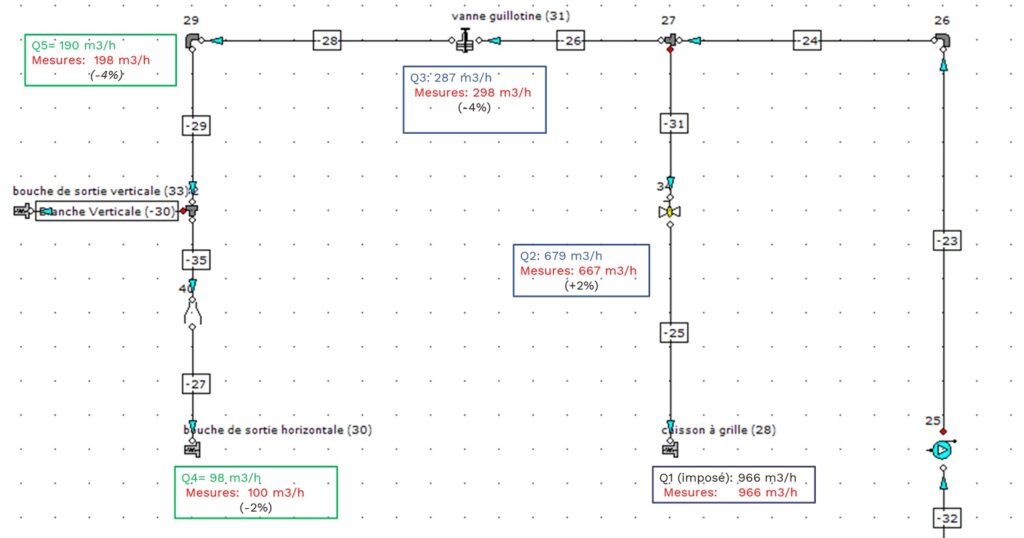
Modelling and simulation
Heating, Ventilation and Air Conditioning (HVAC)
- Heat pumps: modelling the internal components of heat pumps to improve system design (optimisation of sizing) and predict performance under standard or real-world operating conditions
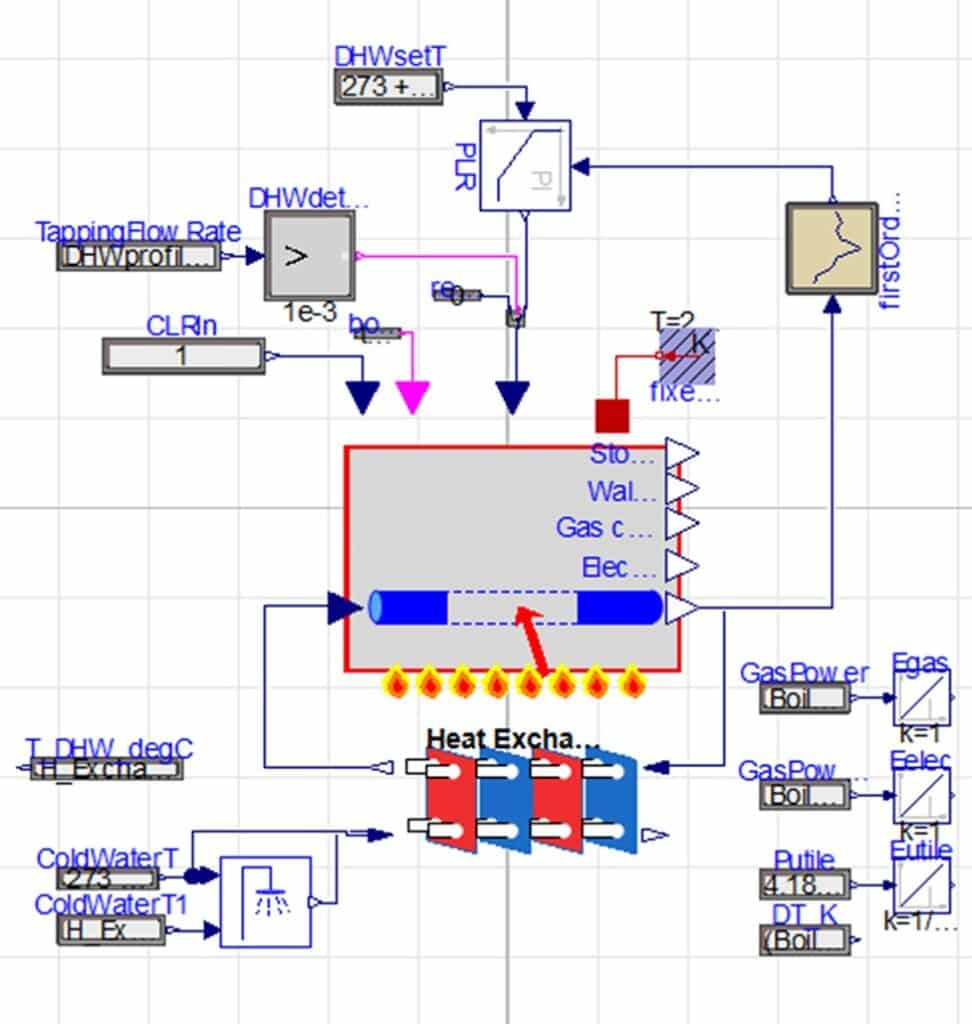
- Boilers: simulation of system behaviour using gas mixtures containing hydrogen and natural gas, and prediction of performance in heating or domestic hot water production modes
- Hybrid heat pumps: simulation of a heat pump coupled with a boiler to optimise the sizing of heat generators and control parameters
- Thermal loops (heating, cooling)
- Control and management of multi-energy systems: electric heat pumps, gas boilers, solar collectors and heat or electricity storage
- Seasonal energy analysis and transient behaviour: a study of evaporator icing, an analysis of the impact of heat recovery and changes in outdoor temperature
- Determining energy performance through simulation of product ranges and assemblies
Case study:simulation of an R134a heat pump operating in DHW production mode with a storage tank, in accordance with the conditions set out in standard EN 16147. Analysis of the fluid load distribution and changes in stratification within the tank over time.
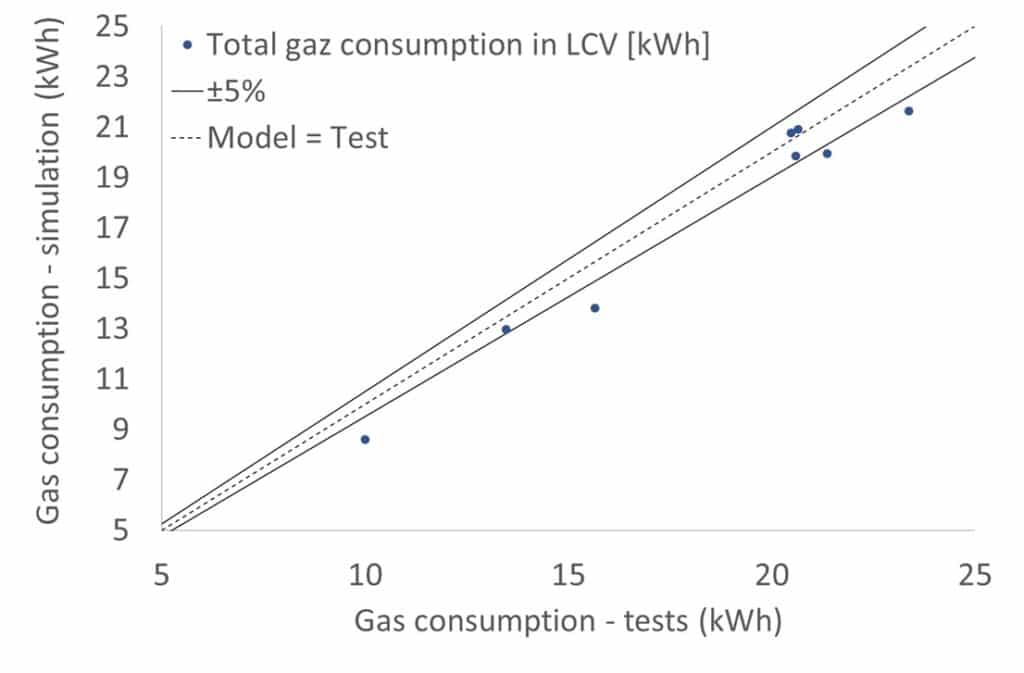
Case study: simulation of gas boilers operating in domestic hot water (DHW) mode in accordance with standard EN 13203-2. A comparison of the simulation results with the performance data measured on nine different units enables the model to be validated.
Industrial processes and systems
- Heating, cooling or drying systems
- Complex fluidic circuits
- Analysis of transients under production conditions
- Energy optimisation of processes
- Decarbonisation of the drying process, including an analysis of the impact on the product’s drying kinetics and on process control
Case study: analysis of the heat recovery potential of a dryer:
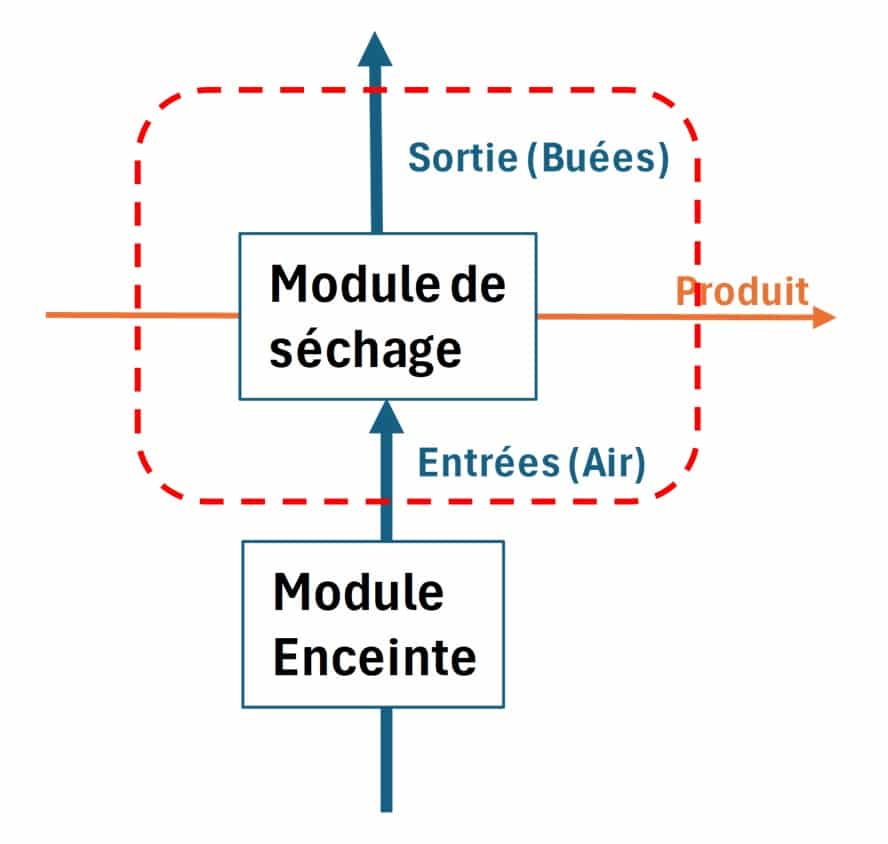
Initial situation
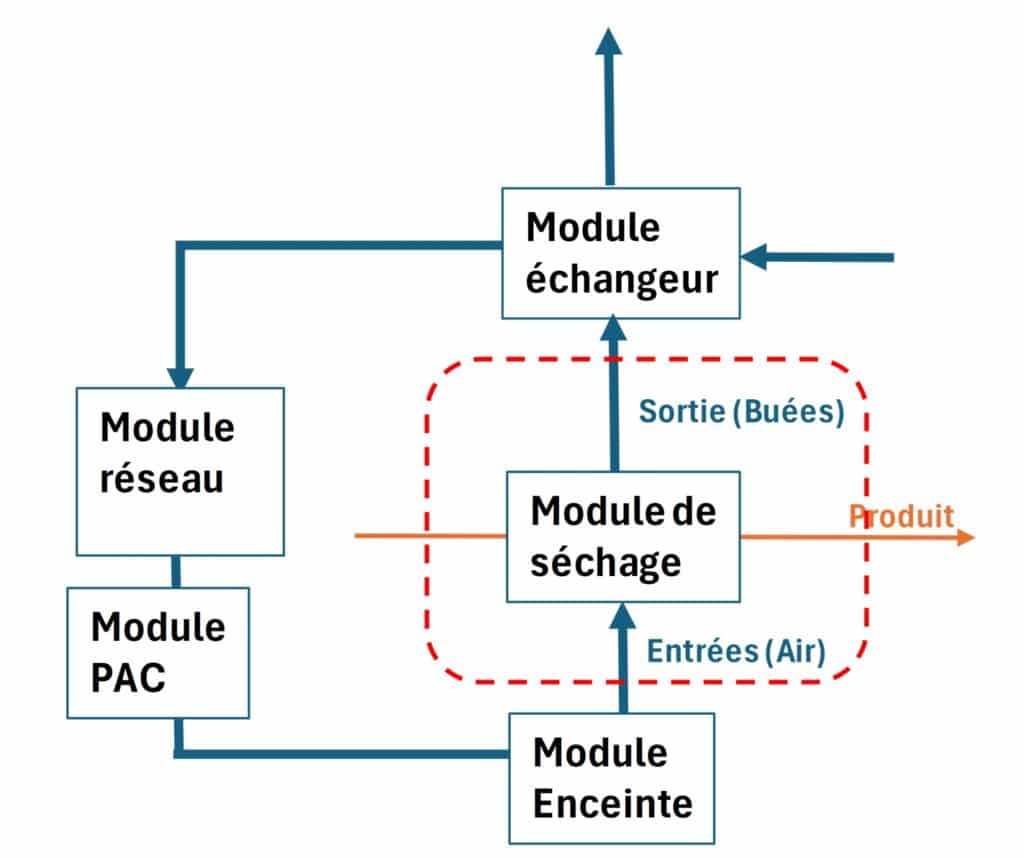
With heat recovery
A unique, integrated technical environment
CETIAT’s 0D/1D modelling benefits from a unique technical context:
- Market-leading calculation codes: DYMOLA, FLUIDFLOW, CONTAM (NIST), MATHIS (CSTB), TRNSYS, CFturbo
- Over 50 test facilities for aerodynamics, hydraulics, filtration, acoustics, combustion, HVAC and thermodynamics, etc. Measurement data obtained using instruments calibrated in-house: ISO/IEC 17025-accredited laboratories
- Complementary to CFD simulation: STAR-CCM+, Altair ultraFluidX (Lattice Boltzmann method), ANSYS-FLUENT, SALOME-CFD